Case Study: The Passion Physique – A Fitness Coaching Website with Member Login and Payments
How BM built The Passion Physique's coaching website: eight plans, member login, online payment, a members-only workout library and e-books in one app.

On this page
- The brief: one place to sell and deliver coaching
- A custom web application, not a template
- Plans that sell themselves
- The members’ library and e-books
- Credibility on the page
- Designed for a phone in the gym
- The client’s path, step by step
- What this means for coaches and fitness brands
- Questions about coaching and membership websites
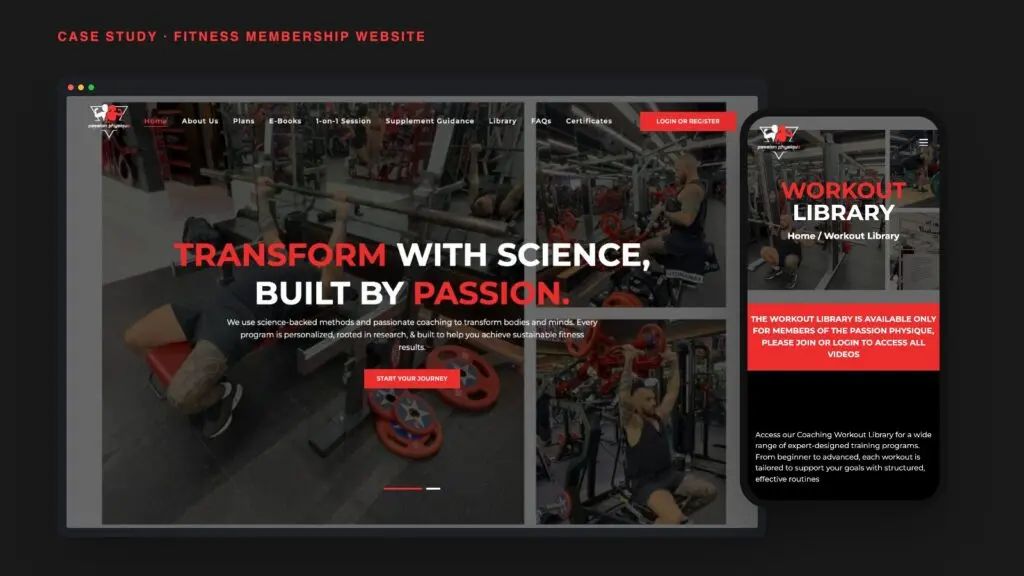
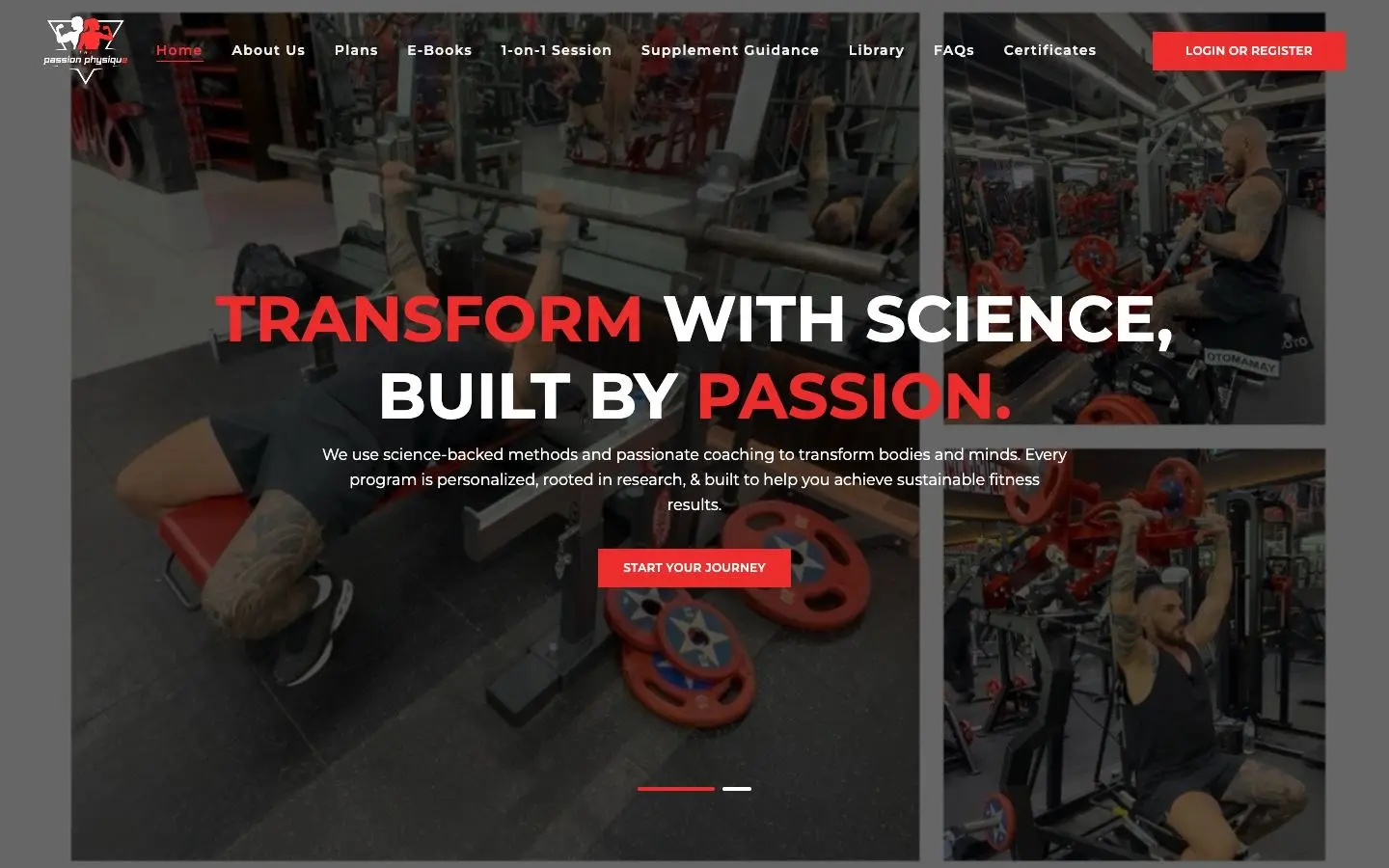
The Passion Physique is an online coaching brand led by Petros Pasiollari and Eirini Stergia Kanonidou, offering science-based training, nutrition and supplement coaching. BM Digital Marketing designed and developed its website, thepassionphysique.com, as a custom web application: a public shop window for the coaching, and behind a member login, the paid plans, e-books and workout library that the coaching is delivered through.
| Client | The Passion Physique |
|---|---|
| Industry | Online fitness and nutrition coaching |
| What BM delivered | Website design and development: a custom web application with member accounts and online payment |
| What the site sells | 8 coaching plans, coaching e-books, a 60-minute 1-on-1 session, supplement guidance |
| Members-only content | Workout library and e-books, opened by signing in |
| Main sections | Home, About Us, Plans, E-Books, 1-on-1 Session, Supplement Guidance, Workout Library, FAQs, Certificates |
| Live website | thepassionphysique.com |
The brief: one place to sell and deliver coaching
Online coaches usually run their business across a patchwork of tools: a page to explain the offer, a payment link, files sent by message, videos in a shared folder. Every gap in that patchwork is a moment where a client gets lost or a sale does not happen. The Passion Physique needed the opposite: one website that explains the coaching, takes the payment and then delivers the content, under its own brand.
That set four requirements:
- Sell several kinds of product side by side: long coaching plans, single consultations and digital e-books.
- Make the choice between plans easy, because a visitor choosing between eight options needs help, not a price list.
- Keep paid content for members, while still showing visitors what they will get.
- Carry the coaches’ credibility, because in fitness coaching people buy the coach before the plan.
A custom web application, not a template
A brochure website could not do this job: it cannot hold member accounts, gate content or take payments in a joined-up way. So we built The Passion Physique as a custom web application. Pages change instantly without reloading, which makes moving between plans, the library and the e-books feel like using an app rather than browsing a website.
Visitors can register, log in and reset a forgotten password. When someone chooses a plan, a session or a consultation and is not signed in, the site asks them to log in first and then takes them straight on to the payment step for what they chose, so the purchase does not get lost on the way.
Plans that sell themselves
The coaching comes in two levels, Basic and Full, each over 1, 3, 6 or 12 months: eight plans in all. The Plans page sets each one out with what it includes, then a “Basic vs Full” comparison so a visitor can see the difference at a glance. The FAQs answer the question most people ask first, in one sentence: Basic covers nutrition, supplements, cardio, recovery, posing and weekly check-ins; Full adds a custom workout programme and more contact with the coach.
Two smaller products sit next to the plans for people not ready to commit: a 60-minute 1-on-1 session held over WhatsApp, and a supplement guidance consultation. Each has its own page explaining what is covered and a “Book now” button.
The members’ library and e-books
The coaching is delivered through content, and that content is what members pay for. We built two members-only areas:
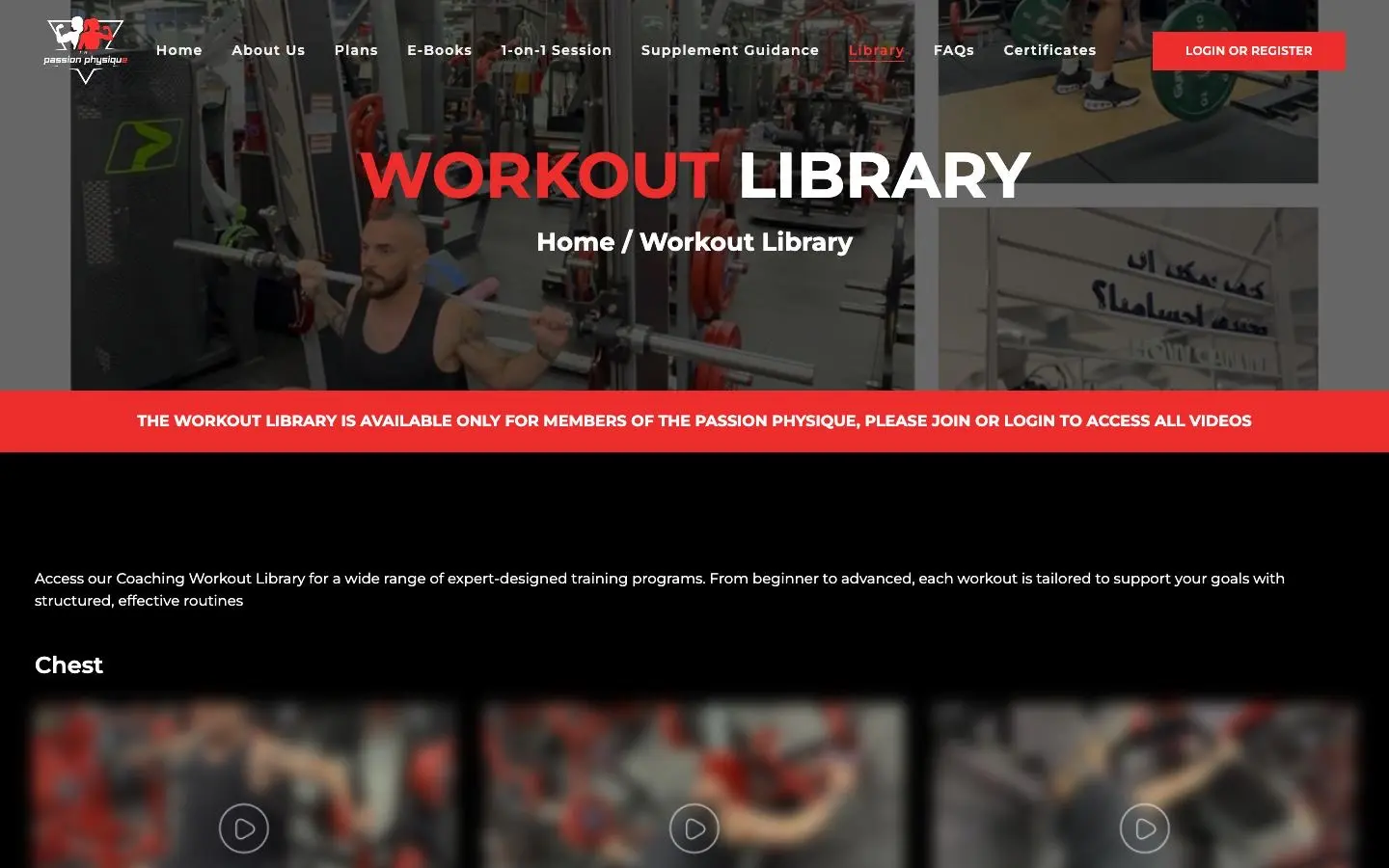
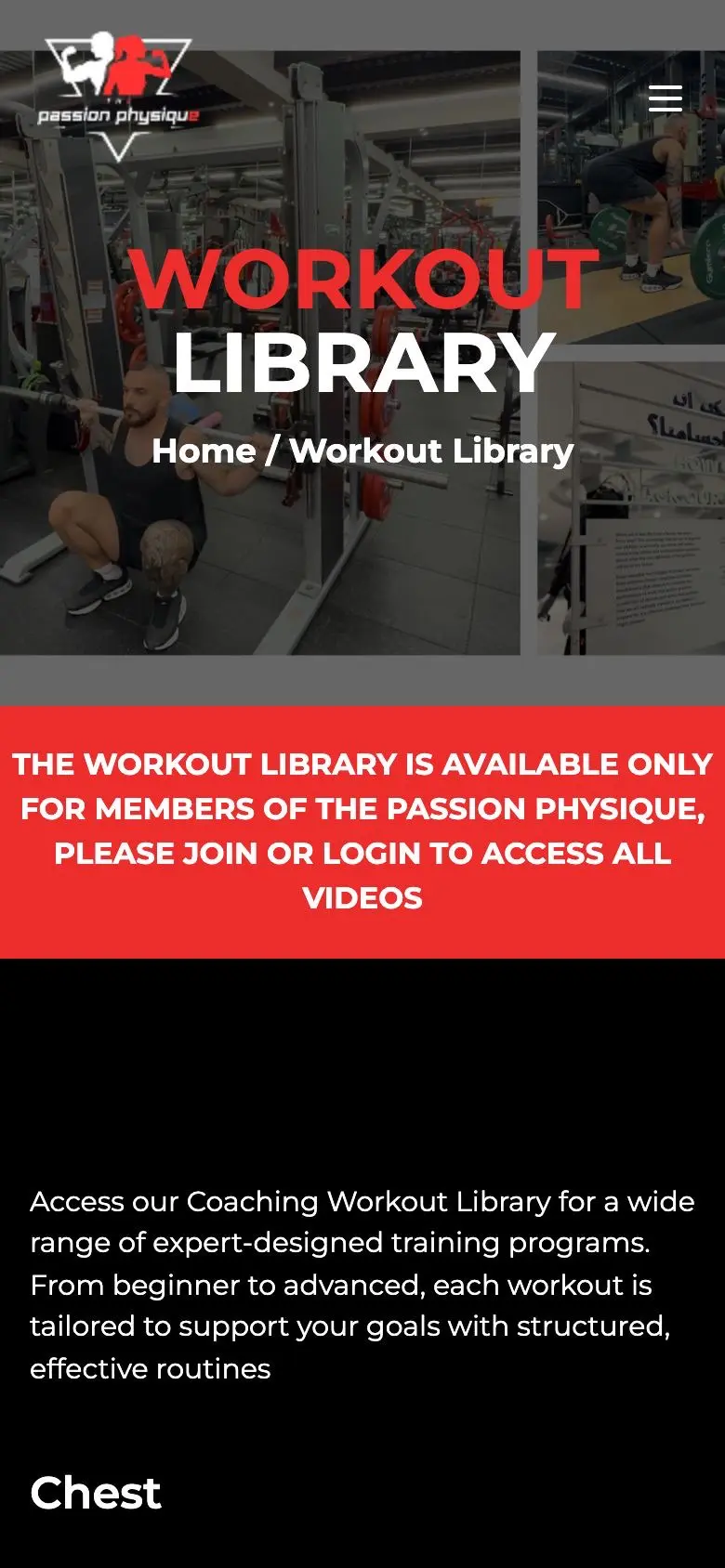
- The Workout Library: exercise videos grouped by muscle group and training type, from chest to cardio, each with a short explanation of what the movement targets and how to do it. Visitors can see the library and the titles; members sign in to watch.
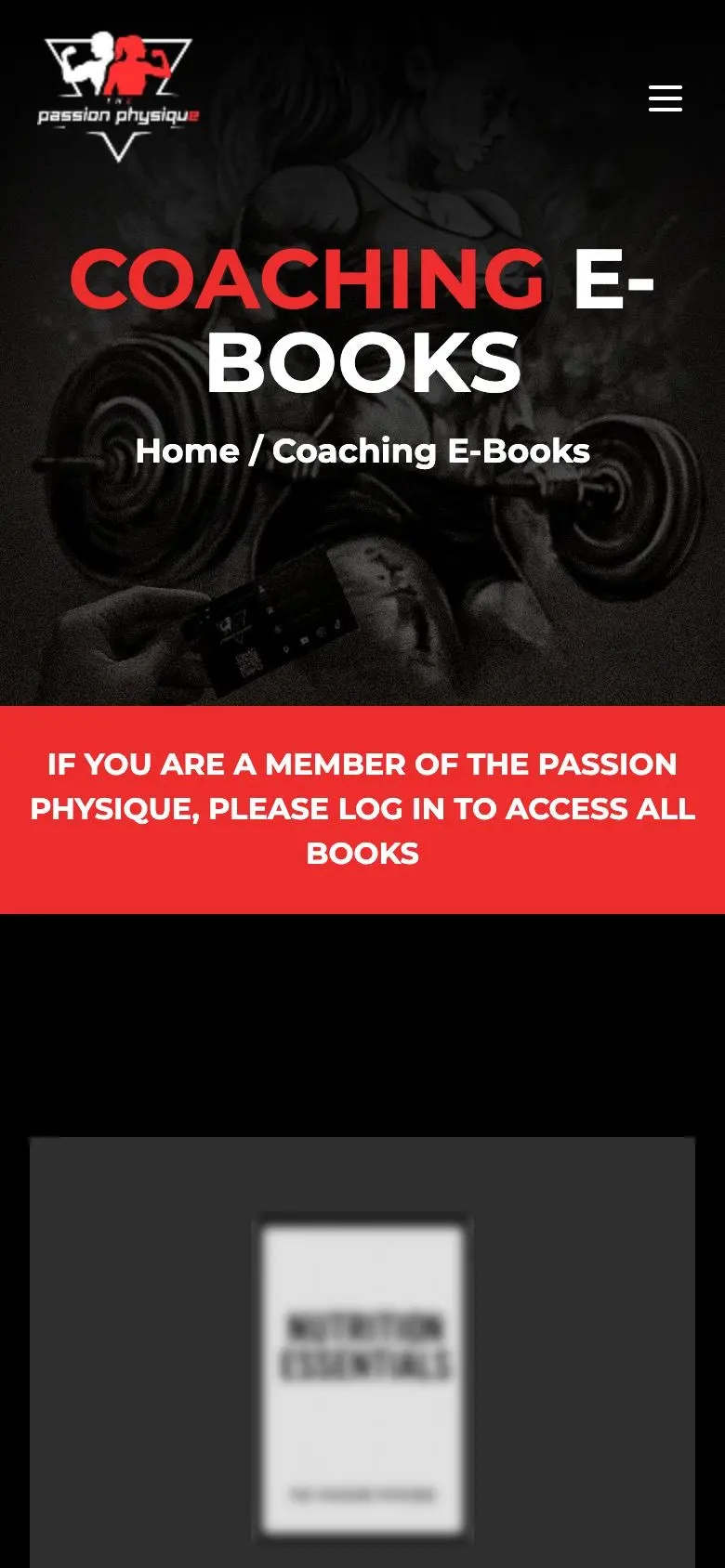
- Coaching E-Books: guides such as Nutrition Essentials, Nutrition: A Deeper Understanding, Hormonal System and The Training Blueprint, each with a one-line summary. They are clearly marked “For members only”, so a visitor understands what membership opens.
Showing the locked content, rather than hiding it, is deliberate: it lets every visitor see the value of joining before they pay.
Credibility on the page
The About Us page introduces both coaches with their full professional background, from university degrees in health technology to coaching certifications. A separate Certificates page lists each qualification with a short explanation, so a visitor can check the coaches’ credentials before buying. The homepage repeats the core promise in four words: science-backed training, passionate coaching, sustainable results, body transformation.
Designed for a phone in the gym
The brand is dark and bold, in black, white and a strong red, with heavy uppercase headings that match the energy of the gym. The coaches’ Instagram, YouTube and TikTok are linked from every page, and every page is designed for a phone first: large buttons, short sections and the menu one tap away. The e-books page and the library keep their structure on a small screen, so a member can find a workout between sets.
The client’s path, step by step
- A visitor reads the homepage and the coaches’ story.
- They compare the plans, or pick a 1-on-1 session or supplement guidance to start smaller.
- They register or log in, and the site takes them straight to the payment for what they chose.
- As a member, they open the workout library and the e-books from their account.
- Questions about payment, invoices, refunds, privacy or injuries are answered in the eleven FAQs.
One brand, one address and one login replace the patchwork of tools most coaches rely on.
What this means for coaches and fitness brands
- Sell and deliver in the same place. A member who pays and then finds the content on the same site, under the same brand, is more likely to stay.
- Show what membership opens. Locked content that visitors can see is a reason to join.
- Offer a smaller first step. A single session or consultation brings in people who are not ready for a twelve-month plan.
- Put the credentials on the page. In coaching, trust in the person comes before the purchase.
BM designs and builds websites and web applications, online shops and the marketing for fitness and nutrition brands that brings members in.
Questions about coaching and membership websites
Can a coaching website take payments and give access to content?
Yes. This one is built as a web application with member accounts: a client signs in, pays for a plan or a session, and opens members-only content such as videos and e-books from the same site.
Why build a custom application instead of using a template?
Templates are fine for a brochure site. When the website has to hold accounts, protect paid content and take payments in one joined-up flow, a custom build fits the business exactly instead of working around a template’s limits.
Can members use the site on their phone?
Yes. The site is designed for phones first, because a coaching client usually opens their programme, a workout or an e-book on a phone.
How much does a membership website cost?
It depends on the products, the members’ area and the payments you need. After a meeting you receive a written plan with exactly what is included.
Building an online coaching or membership business? Book a meeting at our office in Concord Tower, Dubai Media City, or we come to you.
How we write. AI tools help with research and outlines. A person writes, edits and checks every article before it goes live.
Written by
Bilal Azam
Digital Marketing Manager, BM Digital Marketing
Shapes each client's marketing plan at BM: which channels to use, what to say to buyers and how the budget is split between them.