Case Study: Alborj Hair Clinic – Website, SEO, Google Ads and Social Media for a Dubai Hair Transplant Clinic
How BM runs Alborj Hair Clinic's website, SEO, Google Ads and social media in English and Arabic, within Dubai's medical advertising rules.
On this page
- The challenge: a private decision in a crowded market
- 1. The website: built around the surgeon
- 2. SEO: making the clinic easy for Google to understand
- 3. Google Ads: the right searches, the right pages
- 4. Social media: management and paid campaigns
- Working within Dubai’s medical advertising rules
- How the channels work together
- What this means for your clinic
- Questions about clinic marketing
Alborj Hair Clinic is a hair transplant clinic in the Mazaya Centre, Al Wasl, Dubai, led by the Greek hair transplant surgeon Dr. Dimitrios Ziakas. BM Digital Marketing runs the clinic’s whole digital presence: the website in English and Arabic, SEO, Google Ads, and the clinic’s social media, both the day-to-day channels and the paid campaigns. This case study explains how the pieces fit together, and how we work within the advertising rules that apply to every clinic in Dubai.
| Client | Alborj Hair Clinic |
|---|---|
| Industry | Healthcare: hair transplant surgery |
| Location | Mazaya Centre, Al Wasl, Dubai |
| What BM delivers | Website design and development, SEO, Google Ads, social media management, social media advertising |
| Website | Built on Webflow, in English and Arabic |
| Channels | Google Search, Google Maps, Instagram, Facebook, Snapchat, WhatsApp |
| Live website | alborjhairclinic.com |
The challenge: a private decision in a crowded market
A hair transplant is a personal, considered decision. People research for weeks, compare clinics and surgeons, look at results, and often prefer to ask their first questions privately, on WhatsApp or by message, before they ever call. Dubai is also one of the most competitive cities in the world for hair transplants, with large clinic groups bidding on the same searches.
On top of that, clinic advertising in Dubai is regulated. Every word on an ad, a page or a post has to respect the Dubai Health Authority’s medical advertising standards. So the brief was not only “get more enquiries”, but “earn trust and stay within the rules on every channel”.
1. The website: built around the surgeon
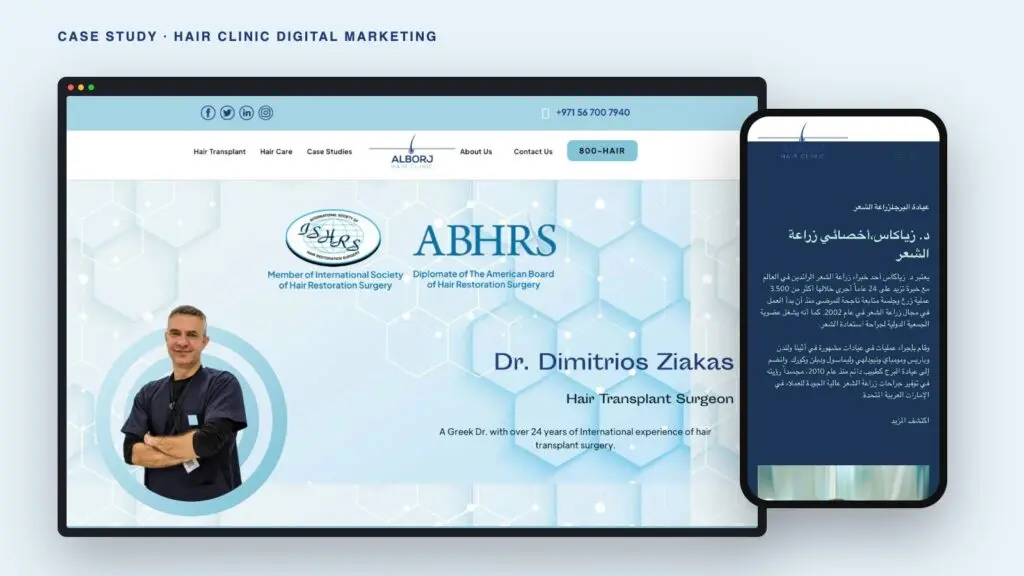
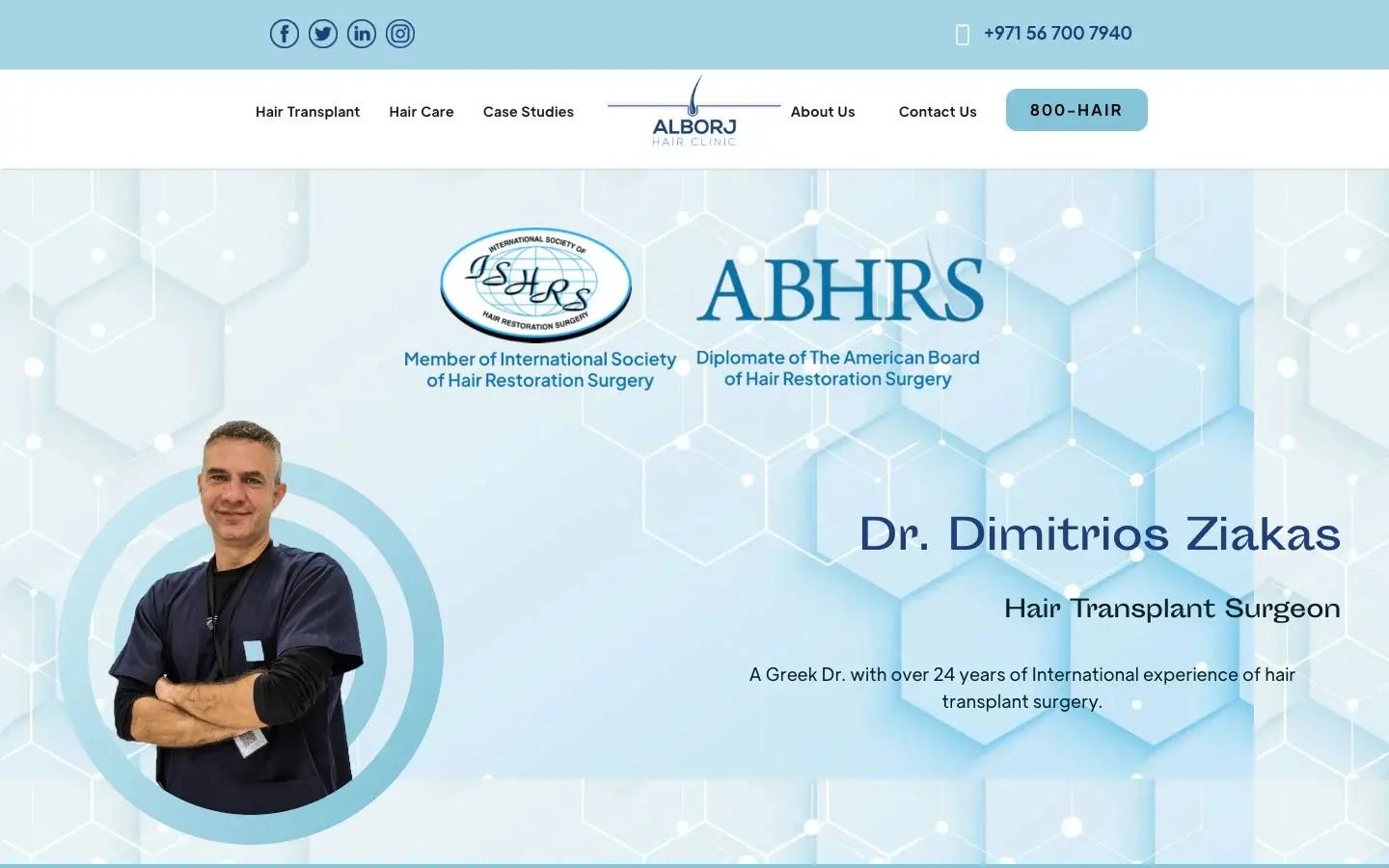
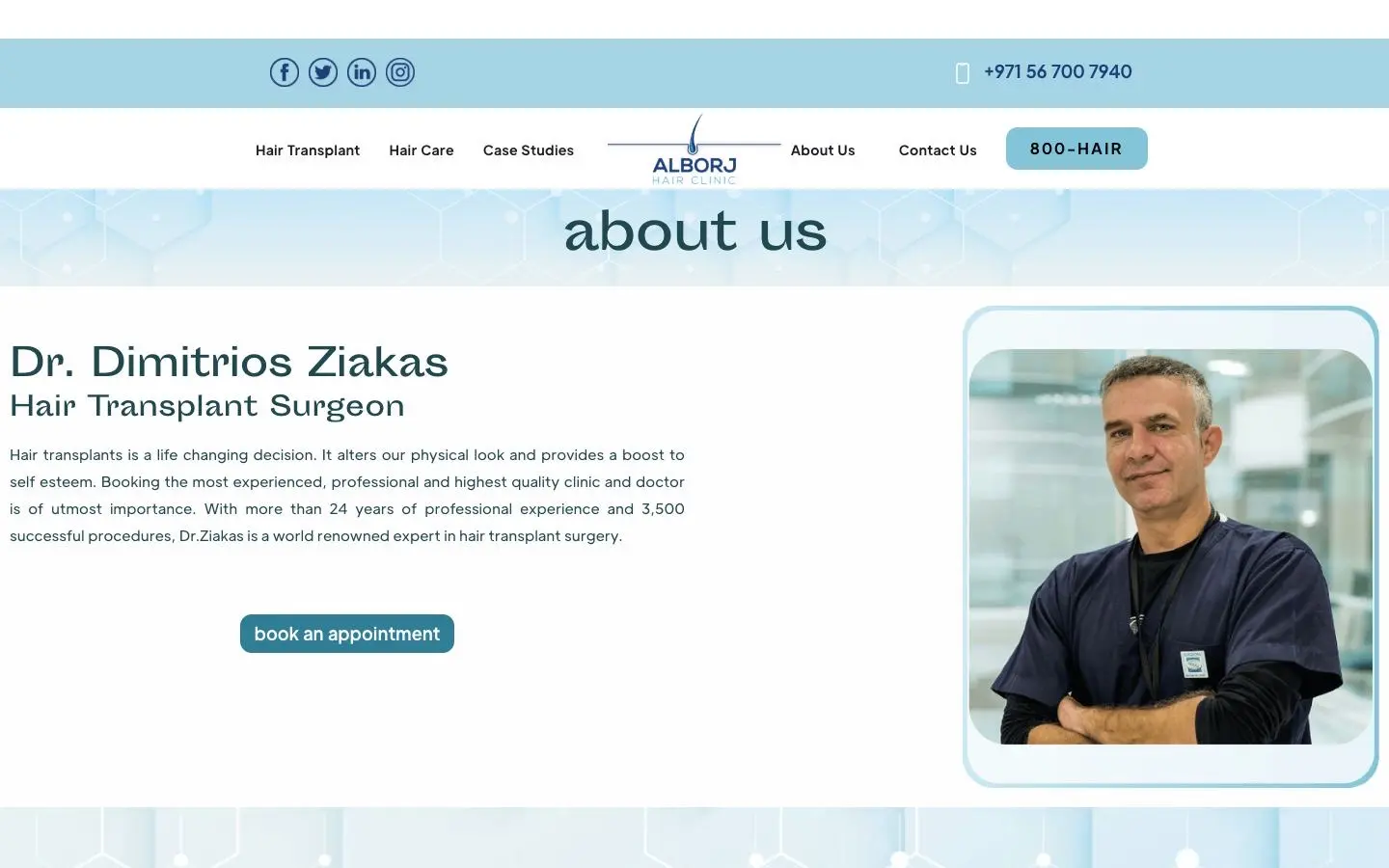
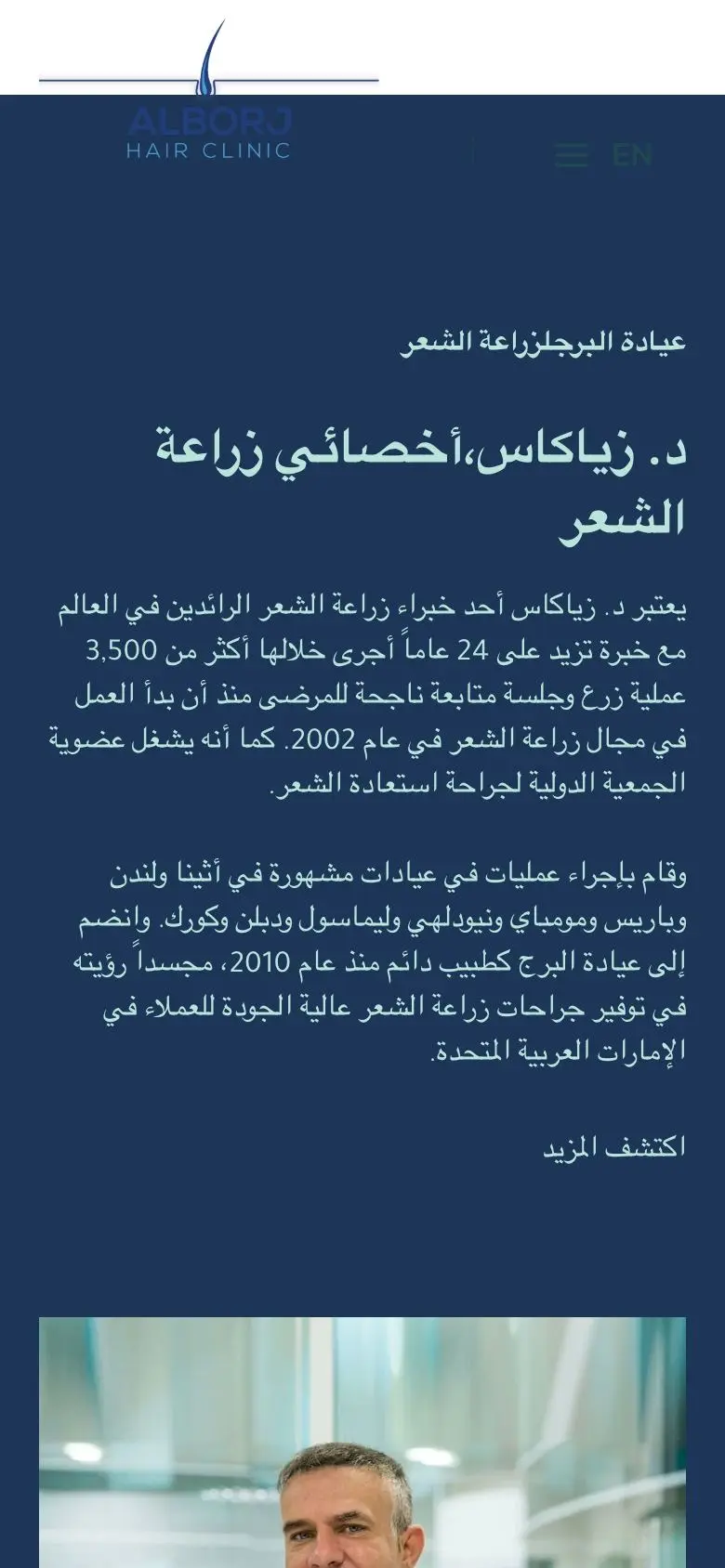
In this field, patients choose a surgeon before they choose a clinic. So we built the website around Dr. Ziakas: his story, his international experience and his professional memberships come first, with the enquiry form right beside them on the homepage.
- Treatment pages explain hair transplant and the stages of hair loss in plain language, each with an enquiry form so the visitor never has to look for one.
- Case pages show real patient cases with the number of hairs moved, the number of sessions and the coverage, so visitors judge the work on facts.
- An FAQ answers the practical questions people ask before booking: how many follicles can be placed in a day, whether the head has to be shaved, what happens after the procedure.
- Several ways to make contact: the enquiry forms, a toll-free number, WhatsApp, a Google Maps link and the clinic’s social channels.
- Press mentions from Gulf News and The National, shown as a “Featured on” section.
A real Arabic website, not a translation
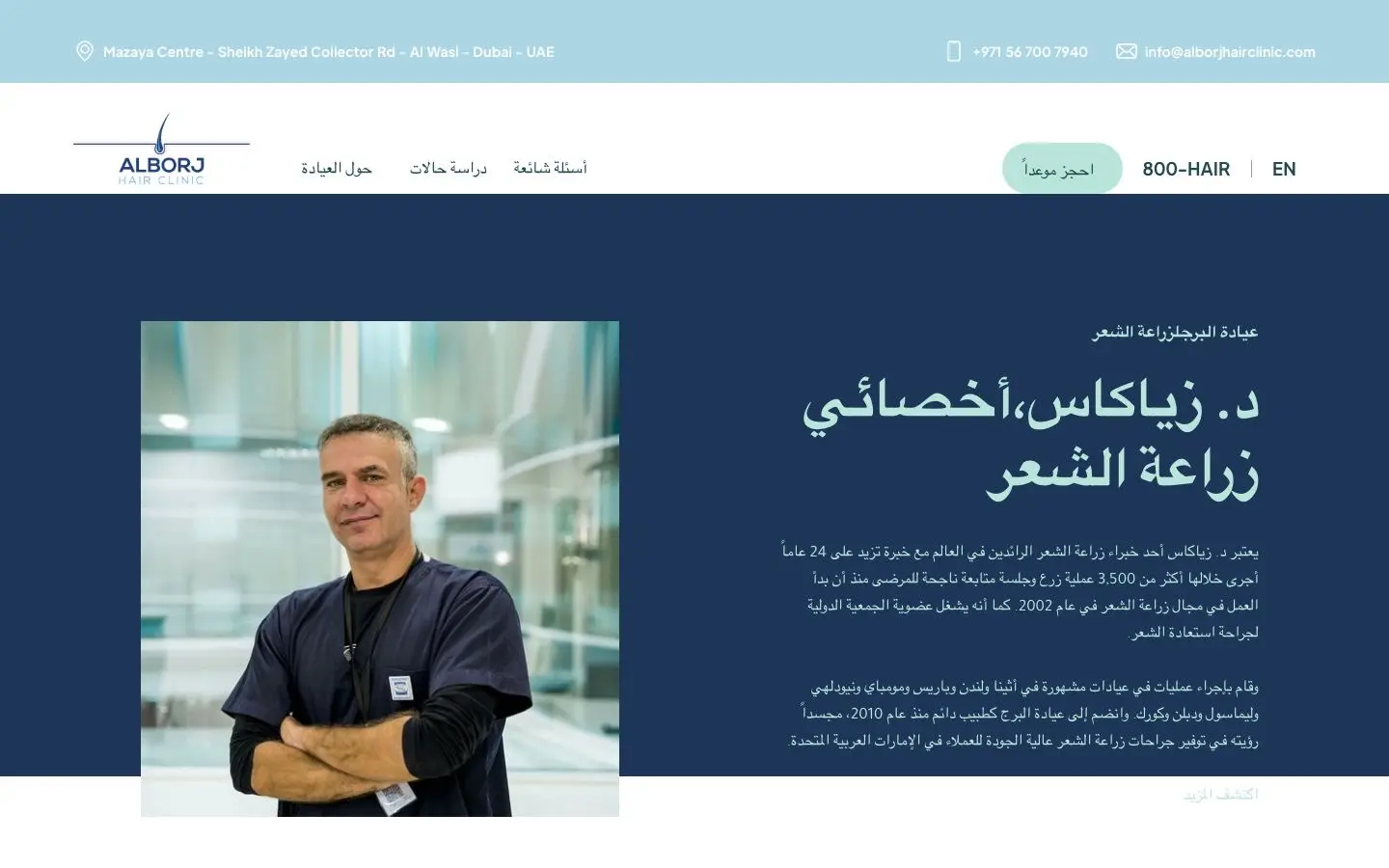
Many people in the UAE prefer to read about a medical decision in Arabic. So the site has its own Arabic homepage, FAQ, case studies and surgeon page, laid out right to left, with wording written for Arabic readers. Each Arabic page is paired with its English version so that Google shows the right language to the right person.
2. SEO: making the clinic easy for Google to understand
A clinic website can look right to a visitor and still be unclear to Google. Our SEO work keeps the technical side clean and the clinic’s story consistent:
- Titles and descriptions for every real page, built around what patients search, such as “Dubai hair transplant”, and written within the DHA rules.
- Only real clinic pages in Google: sample pages that come with the website template are kept out of search.
- Canonical tags and language pairs between the English and Arabic pages, so each language ranks on its own without competing with the other.
- A sitemap listing only the real pages.
- Structured data that tells Google the site belongs to a medical clinic with an address, opening hours and phone number, that Dr. Ziakas is the surgeon with his memberships, and that the FAQ pages contain questions and answers. Google’s own Rich Results Test validates it.
- One consistent story across the site: the surgeon’s years of experience appeared differently on different pages, so we made every mention consistent and set it to update itself each year.
SEO in this market is a long game, and Google’s algorithm updates move rankings for every clinic. Our job is to make sure that when Google looks at the clinic, it finds a clean, consistent, trustworthy site, and to keep strengthening it.
3. Google Ads: the right searches, the right pages
Search ads reach people at the moment they are looking for a hair transplant. Done badly, they also pay for people looking for something else: another clinic, a hair product, a non-surgical treatment, or general information. We run separate English and Arabic campaigns and have organised them around what patients actually search for:
- Grouped by treatment, such as hair transplant, beard, eyebrow, women’s hair transplant and DHI, so each search sees an ad about exactly what it asked for.
- Exact keywords and a long list of excluded searches, so the budget goes to people looking for a surgical hair transplant, not to competitors’ names, products or treatments the clinic does not offer.
- Dedicated landing pages for the main treatments, each with an enquiry form, so the ad and the page tell the same story.
- Ad wording checked against the DHA standards before it runs.
4. Social media: management and paid campaigns
Social media is where many patients first meet the clinic, and where they are most comfortable asking questions. We look after both sides:
- Social media management: the clinic’s social channels and what is published on them.
- Paid social campaigns on Instagram, Facebook and Snapchat, with lead forms that let a person ask for a consultation without leaving the app.
- Video: patient testimonial videos with the doctor speaking in his own words, with the post text written for each platform.
- Click-to-WhatsApp ads that open a chat with a ready-made message asking to book a consultation, so starting a conversation takes one tap.
The ads are written so they never suggest the viewer has hair loss, in line with Meta’s rules on personal attributes.
Working within Dubai’s medical advertising rules
This is the part most agencies leave out of their case studies, and the part a clinic should ask about first. Under the DHA medical advertising standards, a clinic’s marketing must avoid claims such as “the best”, “100%”, “guaranteed results”, “no side effects” or “immediate results”. Before-and-after images must show the same patient, unedited, with written consent. Ads need the right approvals, and the clinic’s medical director has the final word on medical content.
We build these rules into the work, not on top of it: page titles, ad copy and social captions are written to them from the start, and anything medical goes to the clinic for approval before it is published. Keeping a clinic’s marketing compliant protects its licence and its reputation, and it is part of the service, not an extra.
How the channels work together
- Social media introduces the surgeon and the clinic to people who are starting to think about a transplant.
- Google Ads captures the people who are actively searching, with a landing page for their exact treatment.
- The website and SEO give every visitor the same trustworthy picture, in English or Arabic, and help the clinic appear in unpaid search.
- Every route leads to a consultation request: an enquiry form, a WhatsApp chat or a call, handled by the clinic’s team.
Because one team runs every channel, the message is the same everywhere: the same surgeon, the same facts, the same rules.
What this means for your clinic
- Lead with the doctor. Patients choose a surgeon first; make the surgeon’s experience easy to see and check.
- Serve Arabic speakers properly, with real Arabic pages rather than a translated copy.
- Clean up what Google sees before spending more on content: titles, filler pages, sitemap and structured data.
- Spend ad budget only on the right searches, with a page for each treatment.
- Make compliance part of the process, so nothing has to be pulled down later.
BM runs healthcare marketing for clinics in Dubai, including Google Ads for healthcare, SEO, social media management and website design and development.
Questions about clinic marketing
Can a clinic in Dubai advertise on Google and social media?
Yes, within the DHA’s medical advertising standards: no absolute claims such as “the best” or “guaranteed”, before-and-after images only with consent, and the required approvals. We write every campaign to those rules and the clinic approves anything medical.
Should a clinic website be in Arabic as well as English?
In Dubai, usually yes. Many patients prefer Arabic, and Google treats Arabic searches separately, so real Arabic pages reach people an English site cannot.
Why does a clinic need a landing page for each treatment?
Someone searching for a beard transplant wants a page about beard transplants. Matching the ad and the page makes the visitor more likely to ask for a consultation and keeps ad spend on the right people.
Do you handle both the organic social media and the ads?
For Alborj, yes: one team manages the channels and runs the paid campaigns, so the content, the ads and the website tell the same story.
How much does clinic marketing cost?
There are two parts: your ad budget, paid to Google, Meta or Snapchat, and BM’s monthly fee for the work. After a meeting you receive a written plan with both.
Running a clinic in Dubai? Book a meeting at our office in Concord Tower, Dubai Media City, or we come to you.
How we write. AI tools help with research and outlines. A person writes, edits and checks every article before it goes live.
Written by
Bilal Azam
Digital Marketing Manager, BM Digital Marketing
Shapes each client's marketing plan at BM: which channels to use, what to say to buyers and how the budget is split between them.